7 min read
The Workflow You're Not Allowed to Touch
Most AI-era redesigns don't fail because the new design is wrong. They fail because everything moved at once and nothing held. Here's the first question I ask before redesigning anything.
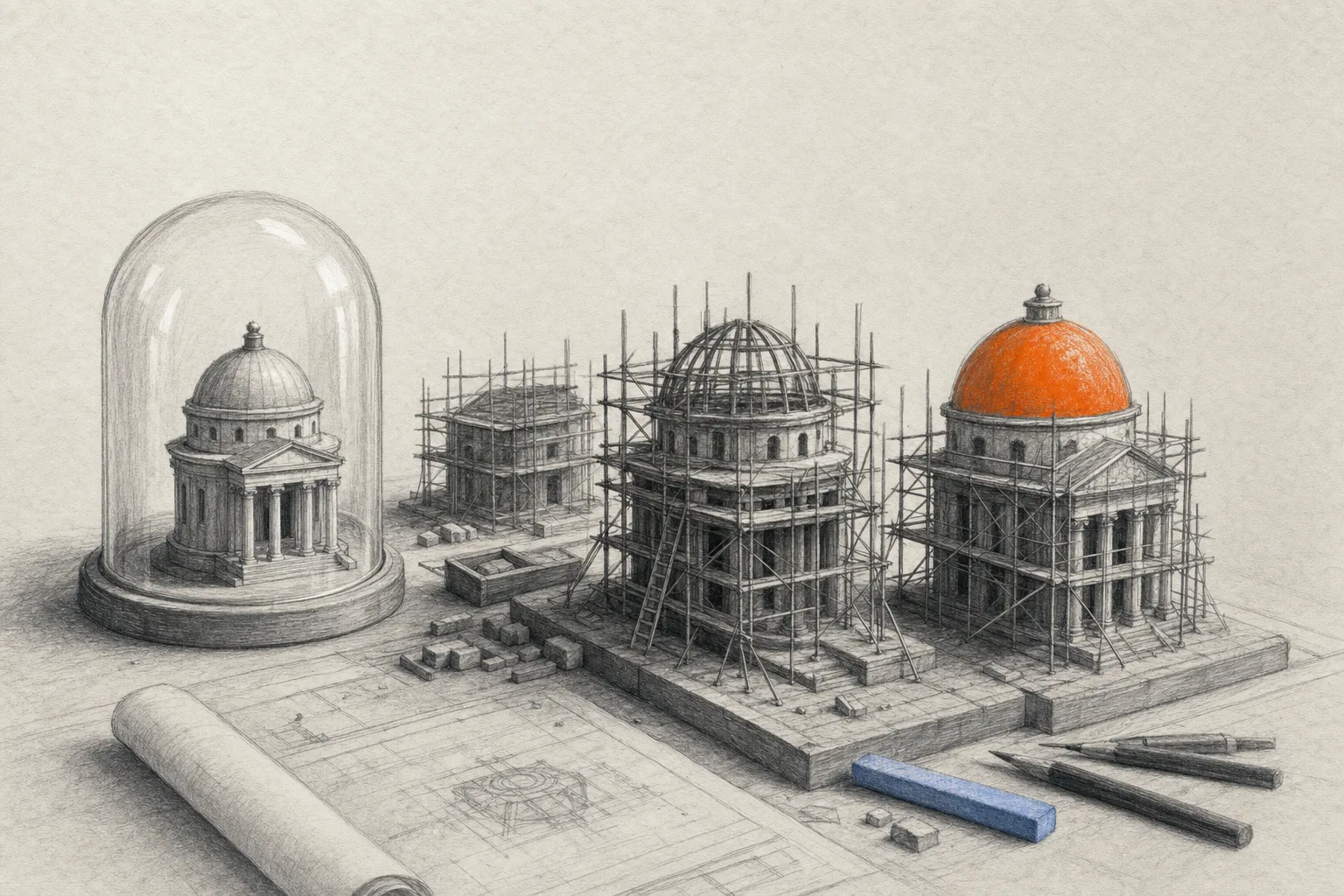
There is a slide that shows up in a lot of leadership meetings right now. It’s titled something like “AI Transformation Roadmap,” and it lists every workflow the company intends to rebuild this year. Quoting. Fulfillment. Collections. Onboarding. Support. Scheduling. Reporting. Eight boxes, all of them lit up, all of them scheduled to change inside the same twelve months.
If you have sat in one of those meetings, you know the energy is good. The team has finally stopped debating whether AI matters and started deciding what to do about it, which is the right place to be. The plan is usually fine. The sequence is usually the problem.
So I ask a different question. Of those eight workflows, which one are you not allowed to touch this year? Which one stays exactly as it is, on purpose, while you rebuild the rest? It tends to stop people, because the slide was built entirely out of things to change. Not one box on it was a thing to protect.
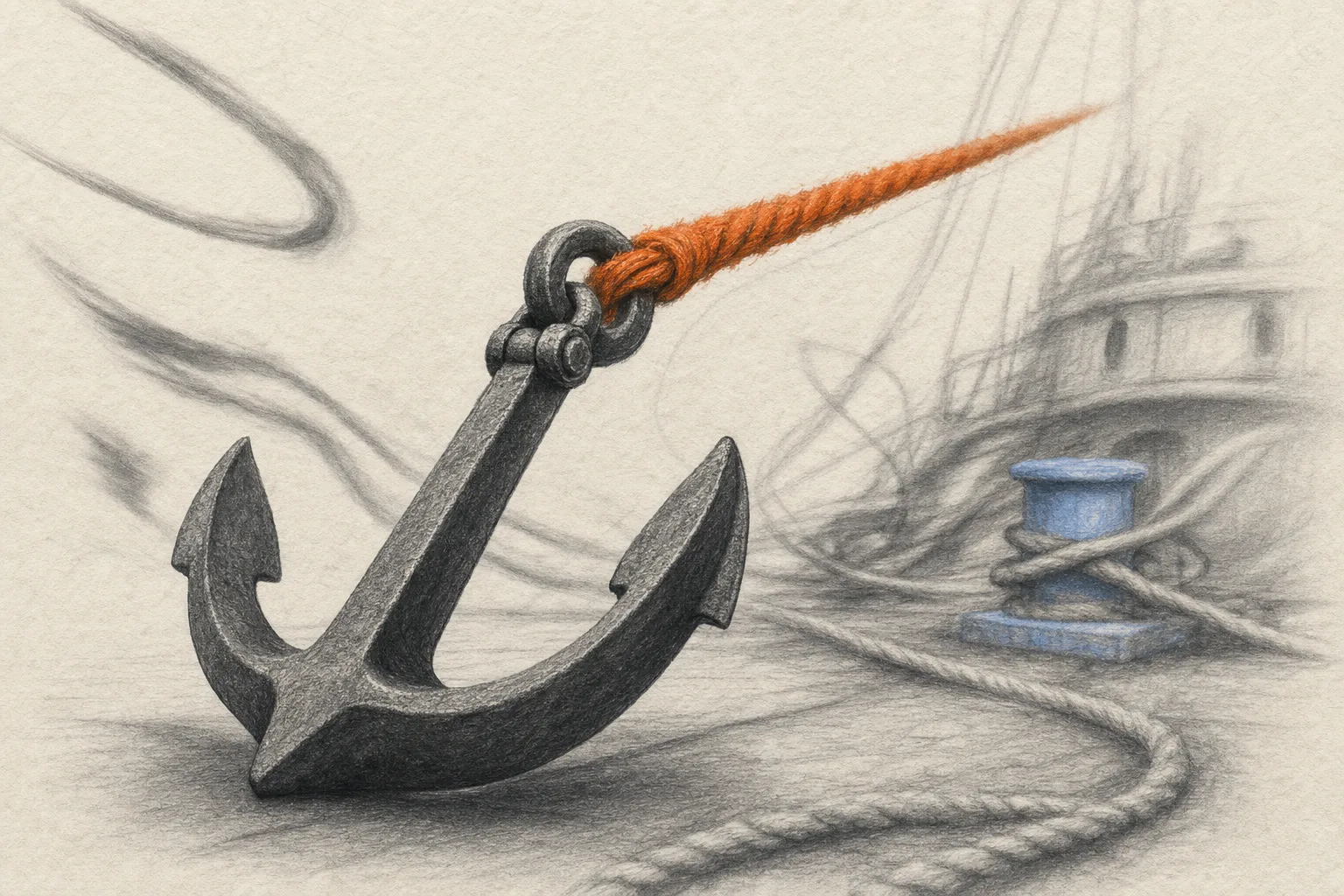
That question, asked before any redesign begins, is the most useful thing I bring to the work. The answer to it has a name. I call it the Operational Anchor.
Why redesigns come apart
Here is the pattern I have watched play out more than once. A company decides to modernize, gets ambitious, and redesigns several core workflows in parallel. Each individual project is sound. The new quoting flow is better than the old one. The new collections process is genuinely faster. On paper, every box improves.
And then the business gets shaky in a way nobody can quite trace. Cash gets lumpy. A delivery promise slips. A long-standing customer gets a worse experience during the exact window the company was trying to impress them. The improvements are real, but the company spends its energy putting out fires instead of compounding the gains.
The reason is mechanical, not strategic. You cannot push off from something that is also moving. A swimmer turns at the wall because the wall holds. A climber pulls up on a hold because the hold is fixed. Take away the fixed point and the same motion that used to move you forward just spins. When every workflow in a business is in flux at once, there is nothing for the rest of the organization to brace against, so normal problems that would usually get absorbed start to compound instead.
Redesign is not dangerous because the new design is wrong. It is dangerous because, for a while, the new thing does not work as well as the old thing it replaced. That dip is survivable when the rest of the business is steady. It is not survivable when the rest of the business is in its own dip at the same time.
What the Anchor actually is
The Operational Anchor is the single workflow you protect while you redesign the others around it.
That’s the whole definition. You name one workflow that does not move this cycle. You declare it off limits, not because it is perfect, but because the rest of the change needs somewhere to stand. Choose the Anchor wrong and the redesign destabilizes the business. Choose it right and the redesign has somewhere to stand.
Naming it is a real decision, made out loud, written down, agreed on before the work starts. It is not a vibe. It is a constraint you accept on purpose, and accepting it is what makes the rest of the plan safe to execute.
The counterintuitive part
Here is where most operators get it wrong, and it is worth slowing down for.
The Anchor is usually not the most important workflow in the business. It is the one you cannot afford to redesign at the same time as everything else.
Those are different things, and the difference matters. The most important workflow is frequently the one you most want to rebuild, because it is where the biggest gains are. The instinct is to point at the crown jewel and say, that’s the one, that’s what we protect. But the crown jewel is often exactly where the upside lives, which means it belongs in the redesign queue, just not first and not alone.
The Anchor is humbler than that. Sometimes it is the cash collection cycle, because that is what funds the redesign you are about to attempt. Sometimes it is the fulfillment promise, because that is the thing customers will leave you over if it wobbles. Sometimes it is a single client relationship that quietly funds the next quarter, and the right move is to wall that relationship off from every experiment until the rest of the house is rebuilt. The Anchor is not the workflow you are proudest of. It is the workflow the business is currently standing on.
Three shapes the Anchor tends to take
Across the operating work I do, the Anchor usually shows up in one of three forms. The specifics change, the shape repeats.
The first is the cash collection cycle. Take a same-day freight carrier with a lot worth modernizing, from dispatch to the back office. When I look at a business like that, the thing that actually funds everything is the daily rhythm of completing runs and getting invoices out the door. That cycle is the Anchor. You leave the collections motion almost entirely alone while you redesign the work around it, because the change is being paid for, week by week, out of that exact cash flow. Touch the thing funding the change and you can lose the ability to finish the change.
The second is the fulfillment promise. For a business whose entire reputation rides on hitting a delivery window, the Anchor is the workflow that keeps that promise, even when it is not the most sophisticated part of the operation. I have run a business like this myself, years in a B2B shop where the whole brand lived or died on getting the order out when we said we would. You can rebuild quoting, scheduling, and back office around that promise all day long. You protect the promise itself, because it is the one thing a customer will not forgive you for breaking, and a broken promise is far more expensive than a slow one.
The third is the single load-bearing relationship. Some companies, especially smaller ones, have one client or one channel that funds the runway for everything else. A solo advisor in the distribution phase of the business, for instance, might have a handful of relationships that effectively underwrite the next two quarters. When that is true, the Anchor is not a process at all. It is that relationship, and the rule is simple: no experiment, no redesign, no new tool gets pointed at it until the rest of the operation has been proven somewhere safer first.
How to name yours
You can do this yourself, before you bring anyone in. Run three questions, in order.
First: which workflow, if it wobbled for two weeks, would put the quarter at risk? Not annoy you. Risk the quarter. That question filters out the things that merely feel important and surfaces the things that are actually load bearing.
Second: which workflow is currently funding the redesign? Change costs money and attention, and that money comes from somewhere. Whatever is generating the cash and stability that pays for the transformation has to keep generating it while the transformation happens. That workflow has a strong claim on being the Anchor.
Third: which workflow, if you got the rebuild wrong, could not be quickly restored? Some processes you can break and roll back by Friday. Others, once you disrupt them, take months to rebuild trust or rhythm or muscle memory. The ones you cannot cheaply undo deserve to be protected, not because they are fragile, but because the cost of being wrong about them is asymmetric.
The workflow that keeps showing up across those three answers is your Anchor. Name it. Write it down. Tell the team it is off limits this cycle, and tell them why, because a protected workflow that nobody understands the reason for just looks like the one place leadership refuses to modernize. The why is what makes the constraint productive instead of confusing.
Where this fits
Naming the Anchor is the first move I make inside every engagement, before a single workflow gets redesigned, because the order of operations is most of the outcome. It is the cheapest insurance there is. It costs one honest conversation, and it is the difference between a redesign that compounds and a redesign that quietly destabilizes the thing it was supposed to improve.
There is an upside to naming it that people miss, too. The Anchor is usually framed as a brake, the one workflow you are not allowed to touch, and that is true. But it also functions as a release. Once you know exactly what is protected, you can be far more aggressive everywhere else, because the downside is contained. The teams that name their Anchor do not move slower. They move faster on the other seven boxes, with less hand-wringing, because they have already drawn the line they will not cross. The constraint is what gives them permission to be bold.
Name the one workflow you will not touch this year, and you give yourself permission to rebuild all the others.
If you are staring at your own version of that eight-box slide, start here. Pick the one box you are not allowed to touch, and be honest about why. The rest of the plan gets safer the moment you do. This is the lens I bring to every area of expertise I work in, and naming the Anchor is the first move I make before redesigning anything. It is also usually where the first real conversation starts, because the way I think about operations begins with what you protect, not what you change.
If you are weighing a redesign and you are not sure what your Anchor is, get in touch. Naming it together is a good place to begin.
Questions
What is the Operational Anchor?
The Operational Anchor is the single workflow you protect, and deliberately do not redesign, while you redesign the others around it. It is the fixed point a redesign pushes off from. Choose it wrong and the redesign destabilizes the business. Choose it right and the redesign has somewhere to stand.
How is the Anchor different from the most important workflow?
It usually isn't the most important workflow, and that's the point. The Anchor is the workflow you cannot afford to redesign at the same time as everything else, because it is currently holding the business steady or funding the change. The most important workflow is often exactly the one you most want to rebuild. The Anchor is the one you protect so you can.
How do I figure out what my Operational Anchor is?
Run three questions. First: which workflow, if it wobbled for two weeks, would put the quarter at risk? Second: which workflow is currently funding the redesign? Third: which workflow, if you got the rebuild wrong, could not be quickly restored? The workflow that shows up across those answers is your Anchor.
Why do AI operational redesigns fail?
The common failure isn't a bad target design. It's sequencing. Teams try to modernize everything at once, so there is no stable workflow for the rest of the business to push off from. When the fixed point is also moving, small problems compound instead of getting absorbed.