Built in the fire 8 min read
The Map That Never Formed
I have lived in North County San Diego for eighteen years and just learned two places I visit are on the same block. GPS never let the map form. AI is making the same offer to your business.
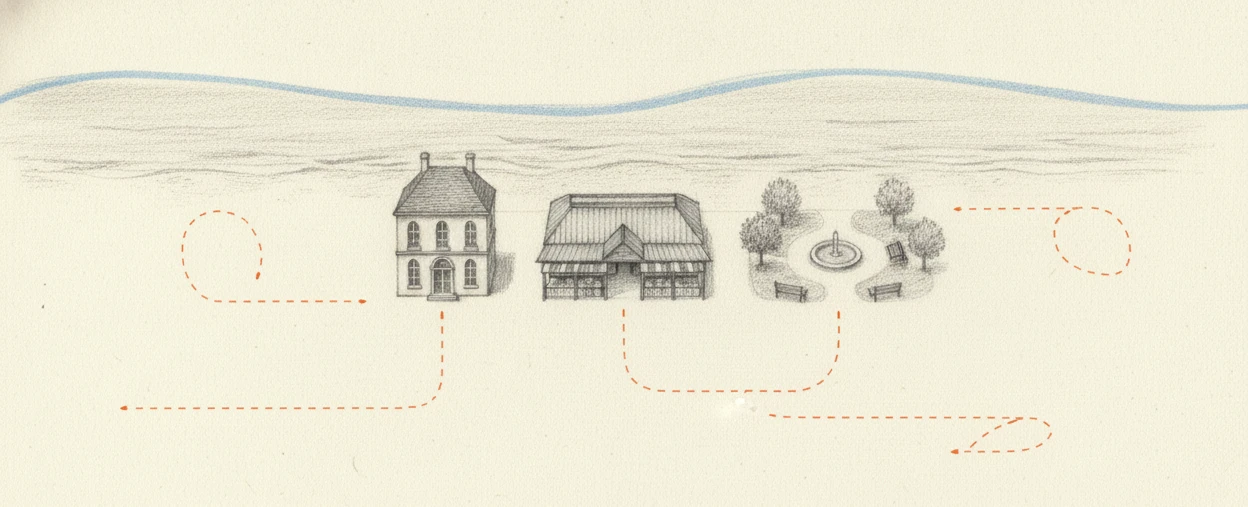
I have lived in North County San Diego for eighteen years. This week I learned that the Cardiff library sits directly behind Seaside Market.
If you are not from here, those names mean nothing, so here is the shape of it. Cardiff-by-the-Sea is a small beach town about fifteen minutes from my house. Seaside Market is a place I go all the time. So is Glen Park, right down the block from it. The library I have only been to a few times this year. But that is the point: I shop at that market constantly, I have walked into that library, and until this week I did not know the one was sitting directly behind the other.
Eighteen years. The map never formed.
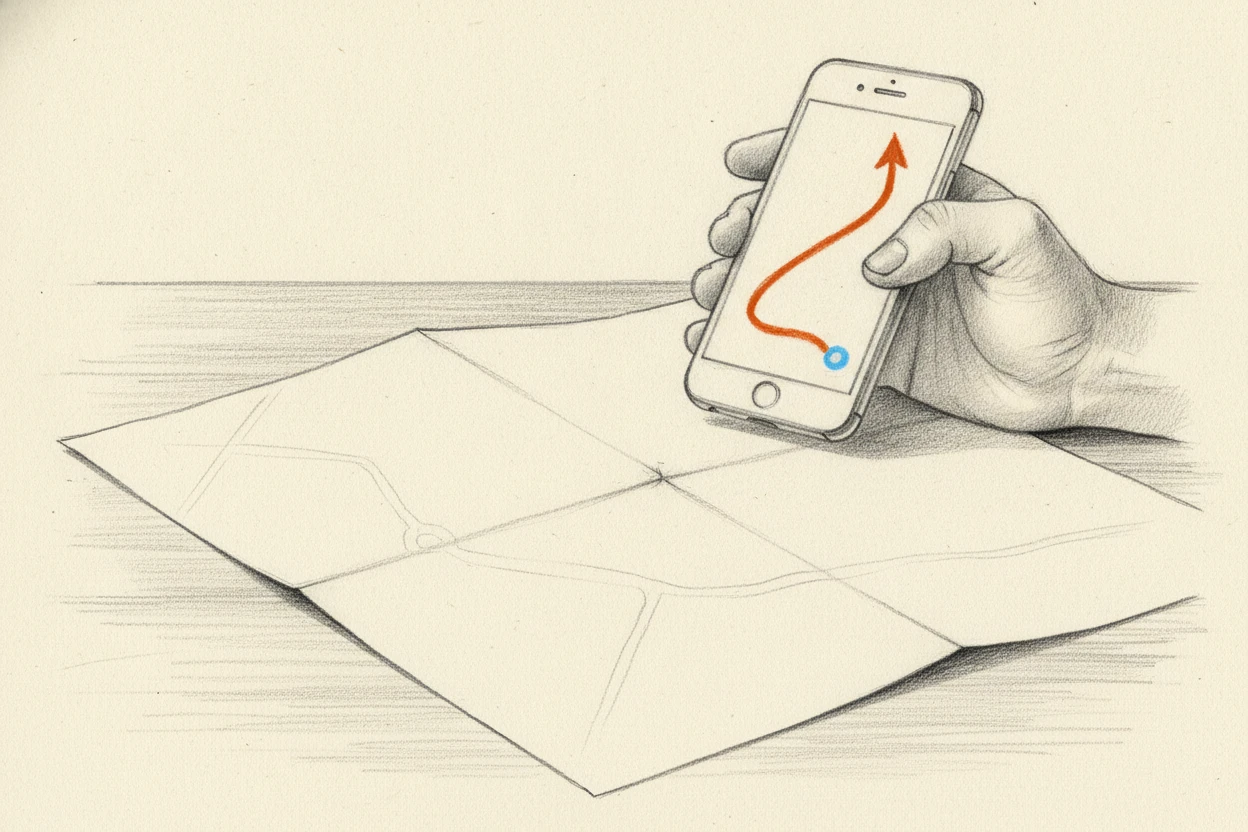
I know exactly why. I have used GPS on essentially every drive for almost twenty years, including trips where I know the destination cold. And I have a good reason. The pin tells me whether there is traffic between here and there, and it tells me when I will arrive. That is not laziness. That is data I genuinely want. So the phone navigates, and I follow, and I arrive, and at no point does anything go wrong.
Here is the part that got my attention. Before California, I lived in Arizona, and before that, Michigan. I could still sketch those places for you: what connects to what, which way things run, how to get from anywhere to anywhere. I knew them the old way, because I had to. I know the region I have lived in for eighteen years worse than places I left twenty years ago.
Every trip was rational
I want to be precise about what happened, because the obvious story is wrong.
The obvious story is that I got lazy. But go find the trip where I made a bad decision. There isn’t one. Every single time, the GPS gave me real value: live traffic, arrival time, zero wrong turns. If you had stopped me on any one of those drives and asked whether I should turn it off, the honest answer was no.
The cost never showed up on any individual trip. It only exists in aggregate, and there was no signal along the way. Nothing broke. Nothing failed. I just stumbled onto what I did not know, eighteen years in, by accident.
There is research on this, and it found the same shape. A Montreal group studied habitual GPS users and found that heavier lifetime use predicted worse spatial memory, and that heavier use over a three-year window predicted steeper decline. It is a small study and I am a single anecdote, so hold both loosely. But the mechanism is not mysterious. Your brain builds spatial maps by doing navigation work: attending to landmarks, holding relationships, making the calls. Turn-by-turn removes exactly that work. The map-building was never a separate activity you could keep while outsourcing the driving directions. The work was the map-building.
I am not here to complain about GPS. I am still using it tomorrow. I am here because I run my business on AI, and the trade I have been making in the car for twenty years is the same trade every business is being offered right now, on almost everything.
GPS for thinking
AI is turn-by-turn navigation for knowledge work. Type the destination, get the route, arrive. The analysis, the draft, the plan, the summary. And every individual use is locally rational, the same way every one of my drives was: the deadline is real, the output is good, the saved hour is a real hour. I do this every day. My practice is, in part, built on doing it well.
But I keep thinking about the shape of my Cardiff problem, because the research on AI and learning found the identical pattern, and it found it with a rigor that surprised me.
The cleanest study I know of ran in high school math classes: nearly a thousand students, randomly assigned. Students who used ChatGPT during practice sessions did 48 percent better on the practice. Then everyone took the exam with no AI, and the ChatGPT group scored 17 percent worse than students who had never used it at all. The tool made practice better and made them worse.
The same researchers ran a second version, same model, with one change: they wrapped it in tutor-style guardrails, so it gave hints and guidance instead of answers. Practice improved 127 percent. And the exam harm disappeared entirely. Same AI. The design flipped the sign.
The detail I cannot shake is what the students believed. The ones who were harmed thought they had learned more than they had. The practice felt great. The map was not forming, and there was no signal. That is the part that changes how I think about all of it: you cannot feel the difference between learning and the feeling of learning. I could not feel Cardiff not forming either. Nobody can. From the inside, the two are identical, and the only honest detector is what you can still do when the tool is closed.
The version that shows up in your business
Now widen it past one student, one driver.
Researchers at Microsoft surveyed hundreds of knowledge workers about how they actually use AI on the job. Two findings matter here. The more people trusted the AI, the less they reported scrutinizing its work. And the more they trusted their own expertise, the more they scrutinized. Confidence in the tool and confidence in yourself pull in opposite directions. The work itself is shifting too: less doing, more reviewing what the machine did.
So here is the question I would put to any leadership team rolling out AI right now, and it is the same question I failed for eighteen years in the car: which parts of your operation are you navigating by pin?
Not “are we using AI too much.” That is the wrong question, the way “should I turn off the GPS” was the wrong question on any given drive. The right questions are unassisted ones. If the AI drafted the pricing analysis and the client pushes back on the number, who in the room can defend it without asking the AI? If the tool is down, or confidently wrong in a way that matters, who on your team still holds the map: how this workflow actually runs, why the number is what it is, what normal looks like, what off looks like?
An operation can ship good work every single day while its comprehension map quietly thins. Output was never a measure of understanding, and the deliverables keep looking finished, because looking finished is exactly what these tools produce. The exam is not on the calendar. It arrives as a hard question in a meeting, an outage, a key resignation. Mine arrived gently, as a mildly embarrassing fact about a library. Yours may not be gentle.
What the pilots did
One industry has already lived the entire arc, and it is worth knowing what it did, because it did not choose abstinence.
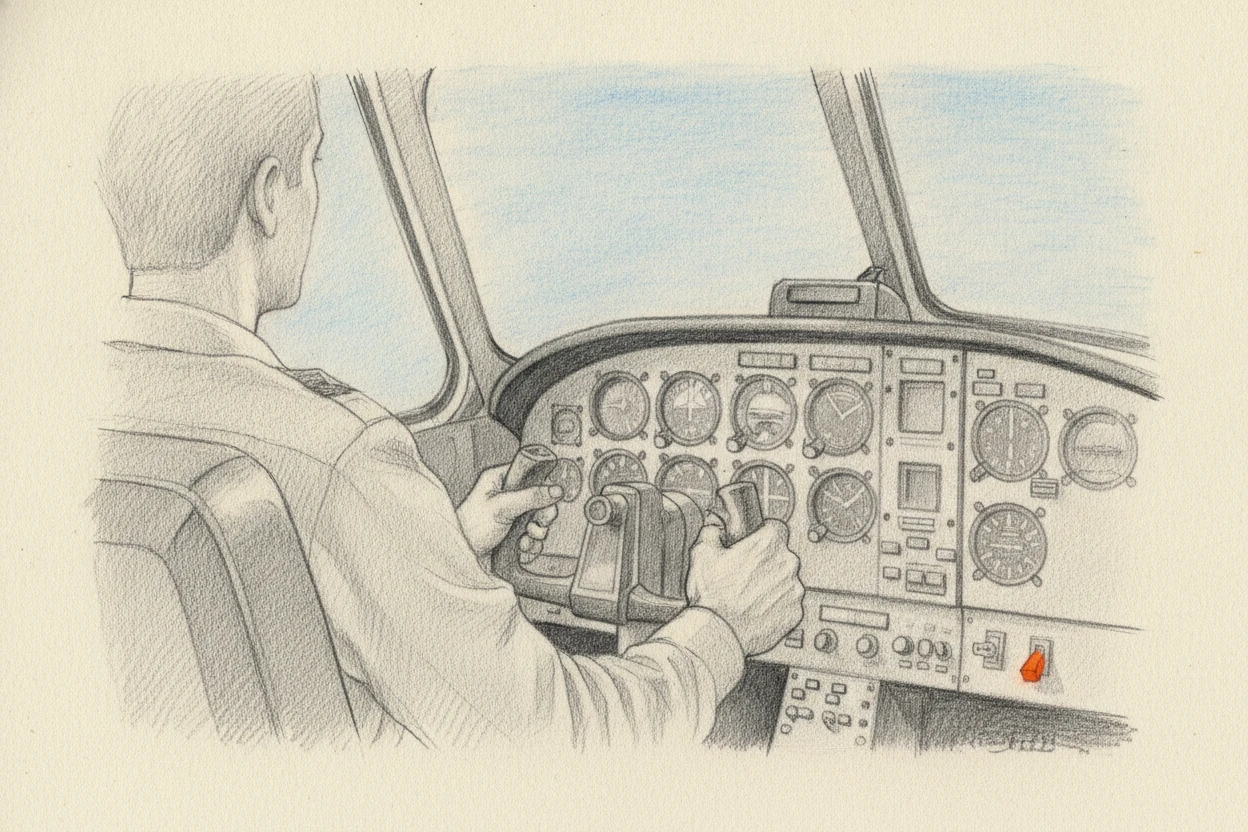
Aviation automated earlier and harder than any knowledge business. Autopilots got so good that pilots’ hand-flying skills measurably faded, and the industry learned about it through tragedy: crews handed a flyable aircraft at the worst possible moment, holding skills that had gone soft from disuse. The response was not to rip out the automation. The automation was too valuable. The response, pushed formally by the FAA, was to require the other thing on purpose: airlines were directed to have pilots regularly hand-fly, in normal conditions, specifically because continuous use of the automation does not maintain the skill. Keep the autopilot. Schedule the reps.
That translates almost directly, and it is where I would start:
Sequence it. Look at who the study’s harm landed on: people who were still learning the skill. That boundary is the whole game. When someone already knows the work, AI is pure speed. They can judge the output, catch the errors, and delegating costs them nothing. When someone is still learning the work, the same tool quietly does the learning for them, and the skill never forms. So the question is not which workflows to automate. It is who on your team is still supposed to be learning what. Give your experienced people every tool. Protect the reps of your newest people, because the boring work AI just absorbed is the work that used to teach them the business.
Keep reps in the loop. For work that matters, take the first pass cold. Sketch the estimate before you ask. Draft the position before the machine drafts it for you. Then bring in the AI and let it make the work better. The study above found the order matters: the harm shows up when the tool replaces the struggle, not when it follows it.
Schedule the exam. Reality will administer one eventually, at a time it picks. Get there first. Reviews where the author defends the number without the AI, spreadsheet allowed. A workflow walkthrough from memory. Small, boring, unassisted checkpoints, held on purpose, the way airlines hold them.
None of this is anti-AI. It is the opposite. The entire point of keeping the skill is that skill is what lets you use the tool aggressively: to delegate more, verify faster, and catch the machine on the day it is confidently wrong. The people who get the most out of the autopilot are the ones who can still fly the plane.
Close
Next time I drive to the Cardiff library, the pin stays off. It will cost me the traffic data. It might cost me four minutes.
That is what a map costs, it turns out. A small toll, paid on purpose, every so often. The alternative is the deal I accidentally took: eighteen years of perfect arrivals, and a discovery at the end of everything that never got built.
Somewhere in your business, a map is not forming right now. Nothing is broken. Every deliverable is arriving on time. That is exactly what it looked like from my driver’s seat, too.
Questions
Does using AI make people worse at their jobs?
Not by itself. The cleanest evidence, a randomized study of nearly 1,000 students, found the harm lands on people who are still learning a skill: those who used an answer-giving AI during practice scored 17 percent worse on a later no-AI exam than people who never used the tool, while believing they had learned more. The same AI wrapped in tutor-style guardrails eliminated the harm. The variable is how the tool is used and who is using it, not the tool itself.
What does 'the map that never formed' mean for a business?
It is the comprehension that quietly fails to develop when work is delegated to a tool. Every individual delegation is rational and the output looks finished, so nothing feels wrong. The gap only shows up when the tool is absent or wrong: a client pushes back on a number nobody can defend, an outage lands on a deadline, a key person leaves. The capability that only exists while the tool is open was never owned.
How can leaders roll out AI without hollowing out their team's skills?
Borrow aviation's answer. When autopilots eroded hand-flying skills, regulators did not remove the automation; they required pilots to regularly fly manually in normal conditions. The business translation: sequence AI adoption so people automate work they already understand, keep cold first passes on work that matters, and schedule unassisted checkpoints, such as having the author walk through an AI-drafted analysis without the AI open.
Should new employees use AI less than experienced ones?
The research points at mode, not prohibition. For someone who already holds a skill, AI is speed. For someone still building the skill, an answer-machine does the learning for them and the skill never forms, so learners need AI that behaves like a tutor plus protected reps on the fundamentals. This matters doubly because the routine work AI now absorbs is the work that used to train future managers.